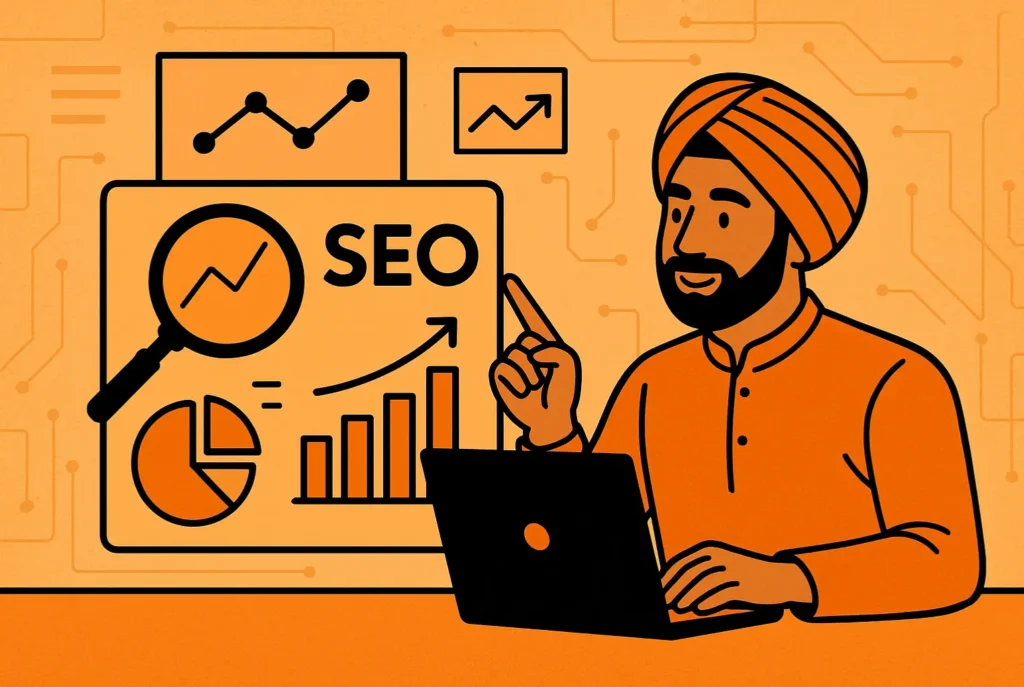

Search Engine Optimization (SEO) has transformed dramatically over the past decade and by 2026, it’s reaching new heights. With AI tools, voice search, and predictive analytics dominating the landscape, marketers who understand these SEO statistics 2026 will gain a significant competitive edge.
The SEO industry continues to expand, with brands worldwide investing heavily in organic visibility, content quality, and AI-powered insights. Let’s dive into the most astonishing data that’s reshaping digital marketing in 2026.
Gone are the days of guesswork. In 2026, over 78% of marketers rely on SEO analytics tools to drive decisions, using data to fine-tune keywords, content, and UX.
According to HubSpot’s 2026 Marketing Report, 61% of businesses plan to increase their SEO budgets this year. With paid ad costs skyrocketing, SEO provides 3x higher ROI than paid media for many industries.
The global SEO market is projected to surpass $105 billion by 2026, growing at a CAGR of 14.6%. The growth is fueled by rising competition for organic visibility and the integration of AI automation tools.
By 2026, 72% of SEO professionals use AI tools like ChatGPT, SurferSEO, and Jasper to create and optimize content. Machine learning models now assist in predictive keyword research and content gap analysis.
Voice search accounts for over 58% of total global searches in 2026. Optimizing for natural language queries and AI assistants is no longer optional it’s essential.
A staggering 43% of users now search through images and video snippets, especially on mobile. Brands using video SEO see 157% higher engagement rates than text-only content.
Mobile continues to dominate with 78% of global organic traffic coming from smartphones. Google’s Core Web Vitals have become non-negotiable ranking factors, with pages loading under 2.5 seconds ranking highest.
In 2026, Google’s AI-powered ranking systems prioritize originality, authority, and engagement metrics. Long-form content exceeding 2,000 words performs 45% better in search visibility.
AI-generated articles account for 35% of all new content in 2026. However, brands using human-AI collaboration models see 22% higher engagement rates and better Google rankings.
Over 64% of websites now use structured data, helping search engines understand context and improve rich snippet visibility.
Since Google’s full shift to mobile-first indexing, websites optimized for mobile UX have outperformed desktop-only versions by 48% in rankings.
Quality over quantity rules in 2026. Websites with fewer than 100 high-quality backlinks can now outrank competitors with thousands of low-value links, thanks to Google’s AI-powered link analysis.
Digital PR campaigns focusing on brand mentions and unlinked citations have boosted domain authority by up to 27% for major brands.
Local SEO has exploded 1 in 2 searches now includes location-based intent. Businesses optimized for Google Business Profiles enjoy 60% more store visits on average.
Positive reviews play a crucial role: 79% of consumers trust online reviews as much as personal recommendations, impacting local rankings significantly.
By 2026, predictive SEO tools analyze user behavior to forecast future search trends allowing marketers to plan content months ahead of demand.
AI SEO tools represent a $12 billion sub-sector within the SEO market, with 65% of enterprises adopting AI for automated audits and optimization.
The average ROI from SEO campaigns has reached 710%, surpassing social media and paid search. For eCommerce brands, SEO drives 44% of total revenue on average.
Pages optimized for intent-based keywords have 32% higher conversion rates, proving the importance of data-driven content strategies.
The future of SEO lies in personalized search, powered by AI assistants like Google Gemini and ChatGPT Search. These tools tailor results to individual user behavior.
As users demand transparency, ethical SEO focusing on authentic content and privacy compliance is expected to define the next era of digital marketing.
Q1. What is the global SEO market size in 2026?
It’s projected to exceed $105 billion, driven by AI and automation tools.
Q2. How important is voice search optimization in 2026?
Extremely with 58% of searches voice-based, optimizing for conversational queries is essential.
Q3. Which SEO factor impacts rankings the most in 2026?
Content quality and Core Web Vitals are leading ranking factors this year.
Q4. Are AI tools replacing human SEO professionals?
No, they enhance human capabilities, allowing marketers to make data-backed, strategic decisions faster.
Q5. What’s the ROI of SEO in 2026?
The average ROI is 7x the investment, making SEO the most cost-effective digital channel.
Q6. How has mobile search changed SEO strategy?
With 78% of searches on mobile, responsive design and fast loading are critical success factors.
The SEO statistics 2026 clearly show that search optimization is becoming smarter, more predictive, and more human-centered. From AI-powered analytics to voice-driven queries, the future of SEO demands adaptability, creativity, and constant learning.
Marketers who align their strategies with these evolving trends won’t just rank higher, they’ll build lasting brand authority and trust.
As we move beyond 2026, the brands that master data-driven SEO will dominate the digital landscape for years to come.